
Monday, January 27, 2014
Belajar Tajwid
Aplikasi dibawah ini cukup menarik untuk belajar Tajwid. (sumber Islam Download)
Download Belajar Tajwid

Wednesday, January 22, 2014
Tuesday, November 22, 2011
Stem (bilingual edition)
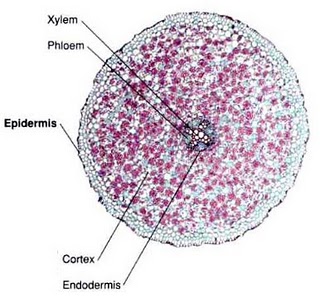
Stem generally grows upward, above the soil and toward the sunlight. It grows in the opposite direction from the earth gravitatition. Stem has two types of vascular tissues, xylem and phloem.
Indonesian:
Batang umumnya tumbuh di atas tanah dn tumbuh menuju cahaya matahari tetapi berlawanan dengan gaya tarik bumi. Di batang terdapat dua macam pembuluh yaitu xilem dan floem.
- Xylem is responsible to transport water from root to the leaves.
- Phloem is responsible to transport food, which are made in leaves, trhoughout the plant.
Indonesian:
Batang umumnya tumbuh di atas tanah dn tumbuh menuju cahaya matahari tetapi berlawanan dengan gaya tarik bumi. Di batang terdapat dua macam pembuluh yaitu xilem dan floem.
- Xilem, berfungsi mengangkut air dari akar menuju daun.
- Floem berfungsi mengangkut makanan yang dibuat di daun ke seluruh bagian tumbuhan.
Monday, November 21, 2011
Types of Root
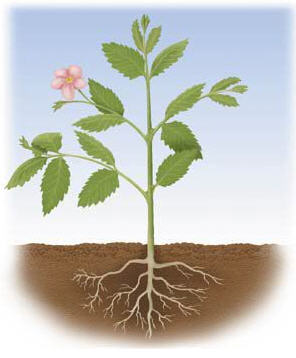
Root divided into two types, namely fibrous root and taproot.

Indonesian:
Akar dibedakan menjadi dua jenis, yaitu akar serabut dan akar tunggang.
- Fibrous root consists of many small roots that grow from the end of the stem. Those roots have similiar size and length. Fibrous root can be found in monocotyledonous plant, such as rice, corn, sugar cane, and coconut.
- Tap root is a main root that grows straight downward and is derivd from stem. The other roots are the branches of the tap root. Such root can be found in dicotyledonous plant, for example mango and apple rose.
Indonesian:
Akar dibedakan menjadi dua jenis, yaitu akar serabut dan akar tunggang.
- Akar serabut berupa akar yang berukuran kecil dan tumbuh di pangkal batang. Ukuran semua akar hampir sama besar dan sama panjang. Akar serabut dimiliki oleh tumbuhan monokotil, contohnya padi, jagung dan kelapa.
- Akar tunggang berupa akar utama yangtumbuh lurus ke bawah dan merupakan kelanjutan dari batang. Akar-akar yang lain merupakan cabang dari akar tunggang. Akar tunggang dimiliki oleh tumbuhan dikotil, contohnya mangga dan jambu.
Sunday, November 20, 2011
Function of Root
Root has several primary function, they are as follows.

Akar memiliki beberapa fungsi utama, yaitu sebagai berikut.
- Provide support for the plant. Supporting the plant to stand upright and prevent it from falling down because of the wind.
- Absorb water and nutrients.
- Stored food

Akar memiliki beberapa fungsi utama, yaitu sebagai berikut.
- menopang tumbuhan. menopang tumbuhan agar dapat berdiri tegak di atas tanah dan tidak roboh jika tertiup angin.
- menyerap air dan zat hara.
- Menyimpan cadangan makanan.
Root

- Root hair functions in absorbsing water and nutrients from the soil.
- Root cap function to protect the root while penetrating the soil.
Akar adalah bagian tumbuhan yang arah tumbuhnya searah dengan gaya tarik bumi. Akar umumnya merupakan bagian tumbuhan yang paling bawah dan berada di dalam tanah. Akar terdiri dari rambut akar dan tudung akar.
- Rambut akar, berfungsi menyerap air dan zat hara dari dalam tanah.
- Tudung akar, berfungsi melindungi akar saat menembus tanah.
Friday, October 28, 2011
Did you know?

Wednesday, October 12, 2011
Lungs

(Source: Science Focus.2009. Science for elementary school Va.Bogor: Yudhistira) .
Disorder on Respiratory Organ
Respiratory organs cannot function well due to illness. Here are some of respiratory illness.

- Influenza or cold is caused by virus. The symptoms are fever, headache, nasal congestion, and sometimes sore throat. The patient of influenza should rest well and eat nutritious food.
- Asthma. Asthma is caused by bronchioles contriction. They have difficulty in breathing. Asthma is caused by substances, wich trigger alelergic, such as dust. It is difficult to be totally cured, but it can be controlled to decrease the symptoms. Medicine for asthma sufferer is meant to expand the respiratory tract muscles.(Source: Science Focus.2009. Science for elementary school Va.Bogor: Yudhistira)
Friday, September 30, 2011
Human Respiration
Take a deep breath and exhale slowly. The activity to inhale and exhale is called breathing.
While breating, we inhale the oxygen. Inside the body, the oxygen is used to burn nutrient to produce energy. The wastes (carbon dioxide and water vapor) are released out from the body.

While breating, we inhale the oxygen. Inside the body, the oxygen is used to burn nutrient to produce energy. The wastes (carbon dioxide and water vapor) are released out from the body.

Special Characteristics of animals
Special Characteristics of bats

What do you know about bats? They usually live caves or dark places. Bats are not birds, they are flying mammals. Bats are nocturnal animals, because they search food during the night and sleep during the day.
Bats have special characteristics that other animals do not have. The most interesting one is its echolocation system.
What is ecolocation system?
Echolocation is a system that uses shound reflection (echo) to locate object. The object can be food, trees, or even wall cave. Thus, bats can recognize their food or where they are going in the dark of night.
Science focus. 2009. Science for elemetary school year VI. Bogor: PT Yudhistira.
resumed by danar

What do you know about bats? They usually live caves or dark places. Bats are not birds, they are flying mammals. Bats are nocturnal animals, because they search food during the night and sleep during the day.
Bats have special characteristics that other animals do not have. The most interesting one is its echolocation system.
What is ecolocation system?
Echolocation is a system that uses shound reflection (echo) to locate object. The object can be food, trees, or even wall cave. Thus, bats can recognize their food or where they are going in the dark of night.
Science focus. 2009. Science for elemetary school year VI. Bogor: PT Yudhistira.
resumed by danar
Wednesday, September 21, 2011
Skeleton

Take a look at yourself in the mirror. You will see that you can stand upright. Do you know why?
Human can stand upright because there is skeleton inside his body. Human skeleton is located inside the body and covered with muscle (flesh) and skin, therefore it called internal skeleton (endoskeleton). Muscle covering the skeleton move the bones so that we can move.
Some animals have skeleton on the outside of their body, it is called external skeleton (exoskeleton); the examples are crab, grasshopper, and shrimp. However, in this chapter, we will only learn about human skeleton.
Human skeleton is devided into three parts, namely skull, body skeleton, and axtremities skeleton.
Science focus. 2009. Science for elemetary school year IV. Bogor: PT Yudhistira.
resumed by danar
Saturday, September 17, 2011

Friday, September 16, 2011


Sunday, September 11, 2011
First Grade
By Mr.Danar Kusuma
1.Greeting (Salam pertemuan):
a.Good morning artinya selamat pagi.
b.Good afternoon artinya selamat siang.
c.Good evening artinya selamat sore.
d.Good night artinya selamat malam.
e.Hi artinya hai..
f.Hello artinya halo.
g.How are you? artinya Bagaimana kabarmu?
h.How do you do? artinya Apa kabar?
Example (Contoh) :
I meet Rina in the afternoon. I say good afternoon to her.
Vocabulary (kosa kata) = I (saya); meet (bertemu); in (di) ; afternoon (siang hari).
= I (saya); say (berkata); good afternoon (selamat siang); to (kepada) her (dia).
Catatan:
Jika ada yang bertanya : How are you? (Bagaimana kabarmu?)
Maka kita menjawab : I am fine. (saya baik-baik saja)
2.Parting (Salam Perpisahan):
a.Good bye artinya selamat tinggal
b.Bye-bye artinya selamat tinggal
c.See you artinya sampai jumpa
d.See you later artinya sampai jumpa besok.
e.Good night artinya selamat tidur.
Contoh :
Agung wants to go home. He says good bye to Rina.
Vocabulary (kosa kata) = wants (ingin); go; (pergi); home (rumah).
3.Personal Identity (identitas diri)
a.Personal identity
My name is… (Nama saya adalah….)
I am from…. (Saya berasal dari…...)
I live in….. (Saya tinggal di……..)
I am …..years old. (Saya berumur...tahun) atau (Umur saya adalah…)
I am a student (Saya adalah seorang siswa)
I like …. (Saya suka….)
I study at… (Saya sekolah/belajar di….)
Contoh:
My name is Arfa. (Nama saya adalah Arfa)
I am from Yogyakarta. (Saya berasal dari Yogyakarta)
I live in Tahunan. (Saya tinggal di Tahunan)
I am six years old. (Saya berumur 6 tahun) atau (Umur saya adalah 6 tahun)
I am a student.
I like reading. (Saya suka membaca)
I study at SD N Tahunan (Saya sekolah/belajar di SD N Tahunan)
b.Cara bertanya dan menjawab.
Cara menanyakan nama : What is your name? (Siapa namamu?)
Cara menjawab : My name is…. (Nama saya adalah…)
Cara menanyakan tempat tinggal :Where do you live? (Dimana kamu tinggal?)
Cara menjawab : I live in…. ( Saya tinggal di…)
Cara menanyakan umur : How old are you? (Berapa umurmu?)
Cara menjawab : I am … years old. (Saya berumur…)
4.Colours (Warna-warna)
a.Macam-macam warna
Yellow = kuning
Orange = Oranye
Blue = Biru
Black = Hitam
Brown = Coklat
Grey = Abu-abu
Green = hijau
Red = Merah
White = Putih
Pink = merah muda
Purple = Ungu
b.Cara menanyakan warna sebuah benda
A: What colour is it?
B: It is red.
A:What colour is the book?
B:The book is white
A: What Colour is that pen?
B: That pen is black.
A: What colour is this apple? (Apa warna apel ini?)
B: This apple is green (Apel ini warnanya hijau)
c.Cara menyatakan warna suatu benda.
It is a pen (Ini adalah sebuah pulpen)
The pen is blue (Pulpen ini warnanya biru)
It is a blue pen(Ini adalah pulpen berwarna biru)
1.Greeting (Salam pertemuan):
a.Good morning artinya selamat pagi.
b.Good afternoon artinya selamat siang.
c.Good evening artinya selamat sore.
d.Good night artinya selamat malam.
e.Hi artinya hai..
f.Hello artinya halo.
g.How are you? artinya Bagaimana kabarmu?
h.How do you do? artinya Apa kabar?
Example (Contoh) :
I meet Rina in the afternoon. I say good afternoon to her.
Vocabulary (kosa kata) = I (saya); meet (bertemu); in (di) ; afternoon (siang hari).
= I (saya); say (berkata); good afternoon (selamat siang); to (kepada) her (dia).
Catatan:
Jika ada yang bertanya : How are you? (Bagaimana kabarmu?)
Maka kita menjawab : I am fine. (saya baik-baik saja)
2.Parting (Salam Perpisahan):
a.Good bye artinya selamat tinggal
b.Bye-bye artinya selamat tinggal
c.See you artinya sampai jumpa
d.See you later artinya sampai jumpa besok.
e.Good night artinya selamat tidur.
Contoh :
Agung wants to go home. He says good bye to Rina.
Vocabulary (kosa kata) = wants (ingin); go; (pergi); home (rumah).
3.Personal Identity (identitas diri)
a.Personal identity
My name is… (Nama saya adalah….)
I am from…. (Saya berasal dari…...)
I live in….. (Saya tinggal di……..)
I am …..years old. (Saya berumur...tahun) atau (Umur saya adalah…)
I am a student (Saya adalah seorang siswa)
I like …. (Saya suka….)
I study at… (Saya sekolah/belajar di….)
Contoh:
My name is Arfa. (Nama saya adalah Arfa)
I am from Yogyakarta. (Saya berasal dari Yogyakarta)
I live in Tahunan. (Saya tinggal di Tahunan)
I am six years old. (Saya berumur 6 tahun) atau (Umur saya adalah 6 tahun)
I am a student.
I like reading. (Saya suka membaca)
I study at SD N Tahunan (Saya sekolah/belajar di SD N Tahunan)
b.Cara bertanya dan menjawab.
Cara menanyakan nama : What is your name? (Siapa namamu?)
Cara menjawab : My name is…. (Nama saya adalah…)
Cara menanyakan tempat tinggal :Where do you live? (Dimana kamu tinggal?)
Cara menjawab : I live in…. ( Saya tinggal di…)
Cara menanyakan umur : How old are you? (Berapa umurmu?)
Cara menjawab : I am … years old. (Saya berumur…)
4.Colours (Warna-warna)
a.Macam-macam warna
Yellow = kuning
Orange = Oranye
Blue = Biru
Black = Hitam
Brown = Coklat
Grey = Abu-abu
Green = hijau
Red = Merah
White = Putih
Pink = merah muda
Purple = Ungu
b.Cara menanyakan warna sebuah benda
A: What colour is it?
B: It is red.
A:What colour is the book?
B:The book is white
A: What Colour is that pen?
B: That pen is black.
A: What colour is this apple? (Apa warna apel ini?)
B: This apple is green (Apel ini warnanya hijau)
c.Cara menyatakan warna suatu benda.
It is a pen (Ini adalah sebuah pulpen)
The pen is blue (Pulpen ini warnanya biru)
It is a blue pen(Ini adalah pulpen berwarna biru)
BATTER LATE THAN NEVER
BATTER LATE THAN NEVER
Being on picket duty (karena tugas piket), Mr. Bambang was very disciplined. He would punish (menghukum) the students who came late or who disobeyed (melanggar) the rules (peraturan) of school.
Priyo was a lazy student (siswa malas). He had been late for more than (lebih dari) ten times (10x) in that semester though (meskipun) he lived in a village (desa) not far from his school. It took (memakan) only five minutes on foot (jalan kaki) from his house to school.
Yesterday he was late again. Actually (sebenarnya) he wanted to come on time (tepat waktu). He failed (gagal) to do so because his father, who worked (kerja) in Jakarta had just returned home (kembali pulang) sick (sakit).
“Coming late again Priyo?” asked Mr. Bambang.
“Is it because of (karena) transportation?getting up late?Motorcycle?Changing school uniforms?Taking books being left at home?or something else?asked Mr. Bambang annoyingly (dengan jengkel).
“No, Sir,”Priyo answered. His face looked (kelihatan) pale (pucat). Priyo tried to explain why, but Mr. Bambang did not want to hear (mendengar) his excuse (alasan).
Mr. Bambang did not say anything for a while (untuk beberapa saat). He was thingking about the punishment (hukum) he wanted to give. Then he opened priyo’s records (catatan) from month to month (dari bulan ke bulan). He also consulted (konsultasi) with other teachers.
Finally (akhirnya), Mr. Bambang decided (memutuskan), “You’d better (lebih baik) go home (pulang) now.”
Priyo tried again to explain the reason (alasan) why he came late again. He said the truth (sebenarnya) what really (sebenarnta) happened (terjadi) to him.
Hearing (mendengar) the order (perintah), Priyo argued (membantah) and said immediately (dengan segera), “All right, Sir (Baik, Pak). This is my fault (salahku), but what is this saying for?(Untuk apa peribahasa ini?) “Better Late Than Never.” (Lebih baik terlambat daripada tidak sama sekali).
Hearing that, Priyo’s friends laughed (tertawa).
Glossary:
About : tentang Late : terlambat
Again : lagi Left : meninggalkan, tertinggal
Also : juga Lived :tinggal
Answered: menjawab Minute : menit
Anything: apapun Month : bulan
Asked : bertanya Not :tidak
Because : karena Only : hanya
Book : buku Opened : membuka
But : tetapi Or : atau
Came, coming: datang Say : mengatakan, berkata
Changing: berganti, Something: sesuatu
mengganti
Discipline: disiplin Take, taking: mengambil
Do : melakukan Then : ketika
Else : yang lain Thinking: berpikir, mengira
Explain : menjelaskan To : untuk
Face : wajah Tried, Try: mencoba
Far : jauh Uniform : seragam
For : untuk Very : sangat
From : dari Want, Wanted : ingin
Give :member Who : siapa, siapa yang, yang
He : dia Why : kenapa
His : milik dia Would : akan / mau
House : rumah Yesterday: kemarin
Just : baru saja, hanya
Sumber : Slamet Riyanto.2007. School Funny Stories. Wonosari: Pustaka Pelajar
Resumed by Mr. Danar
Being on picket duty (karena tugas piket), Mr. Bambang was very disciplined. He would punish (menghukum) the students who came late or who disobeyed (melanggar) the rules (peraturan) of school.
Priyo was a lazy student (siswa malas). He had been late for more than (lebih dari) ten times (10x) in that semester though (meskipun) he lived in a village (desa) not far from his school. It took (memakan) only five minutes on foot (jalan kaki) from his house to school.
Yesterday he was late again. Actually (sebenarnya) he wanted to come on time (tepat waktu). He failed (gagal) to do so because his father, who worked (kerja) in Jakarta had just returned home (kembali pulang) sick (sakit).
“Coming late again Priyo?” asked Mr. Bambang.
“Is it because of (karena) transportation?getting up late?Motorcycle?Changing school uniforms?Taking books being left at home?or something else?asked Mr. Bambang annoyingly (dengan jengkel).
“No, Sir,”Priyo answered. His face looked (kelihatan) pale (pucat). Priyo tried to explain why, but Mr. Bambang did not want to hear (mendengar) his excuse (alasan).
Mr. Bambang did not say anything for a while (untuk beberapa saat). He was thingking about the punishment (hukum) he wanted to give. Then he opened priyo’s records (catatan) from month to month (dari bulan ke bulan). He also consulted (konsultasi) with other teachers.
Finally (akhirnya), Mr. Bambang decided (memutuskan), “You’d better (lebih baik) go home (pulang) now.”
Priyo tried again to explain the reason (alasan) why he came late again. He said the truth (sebenarnya) what really (sebenarnta) happened (terjadi) to him.
Hearing (mendengar) the order (perintah), Priyo argued (membantah) and said immediately (dengan segera), “All right, Sir (Baik, Pak). This is my fault (salahku), but what is this saying for?(Untuk apa peribahasa ini?) “Better Late Than Never.” (Lebih baik terlambat daripada tidak sama sekali).
Hearing that, Priyo’s friends laughed (tertawa).
Glossary:
About : tentang Late : terlambat
Again : lagi Left : meninggalkan, tertinggal
Also : juga Lived :tinggal
Answered: menjawab Minute : menit
Anything: apapun Month : bulan
Asked : bertanya Not :tidak
Because : karena Only : hanya
Book : buku Opened : membuka
But : tetapi Or : atau
Came, coming: datang Say : mengatakan, berkata
Changing: berganti, Something: sesuatu
mengganti
Discipline: disiplin Take, taking: mengambil
Do : melakukan Then : ketika
Else : yang lain Thinking: berpikir, mengira
Explain : menjelaskan To : untuk
Face : wajah Tried, Try: mencoba
Far : jauh Uniform : seragam
For : untuk Very : sangat
From : dari Want, Wanted : ingin
Give :member Who : siapa, siapa yang, yang
He : dia Why : kenapa
His : milik dia Would : akan / mau
House : rumah Yesterday: kemarin
Just : baru saja, hanya
Sumber : Slamet Riyanto.2007. School Funny Stories. Wonosari: Pustaka Pelajar
Resumed by Mr. Danar
Reading Practice
READING PRACTICE (Latihan Membaca)
My name is Bambang and I am a student (Nama Saya adalah Bambang dan saya adalah seorang siswa). I was born in Tahunan not far from here (Saya dilahirkan di Tahunan tidak jauh dari sini). I was born on April 24 2003 (Saya lahir pada tanggal 24 April 2003). I study in Tahunan elementary school(Aku sekolah di SD N tahunan). I am first grade now(Saya kelas satu sekarang).
I have two sisters and one young brothers (Aku mempunyai dua kakak perempuan dan satu adik laki-laki). My father’s name is Slamet and my mothers name is Tri Jumiyati (Nama ayahku adalah Slamet dan nama ibuku adalah Tri Jumiati). I have many friends in this class (Aku mempunyai banyak teman di kelas ini).
My name is Bambang and I am a student (Nama Saya adalah Bambang dan saya adalah seorang siswa). I was born in Tahunan not far from here (Saya dilahirkan di Tahunan tidak jauh dari sini). I was born on April 24 2003 (Saya lahir pada tanggal 24 April 2003). I study in Tahunan elementary school(Aku sekolah di SD N tahunan). I am first grade now(Saya kelas satu sekarang).
I have two sisters and one young brothers (Aku mempunyai dua kakak perempuan dan satu adik laki-laki). My father’s name is Slamet and my mothers name is Tri Jumiyati (Nama ayahku adalah Slamet dan nama ibuku adalah Tri Jumiati). I have many friends in this class (Aku mempunyai banyak teman di kelas ini).
Subscribe to:
Posts (Atom)